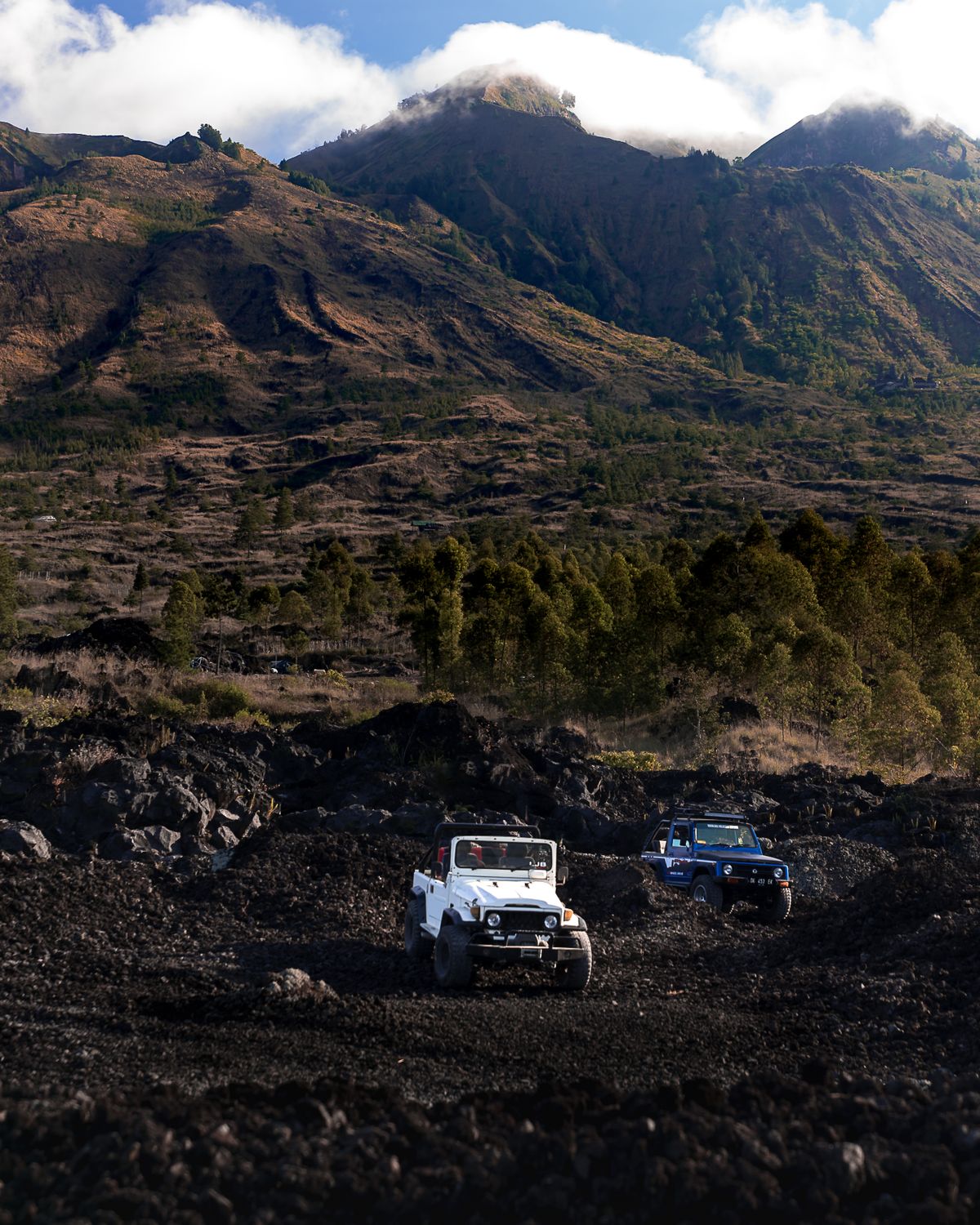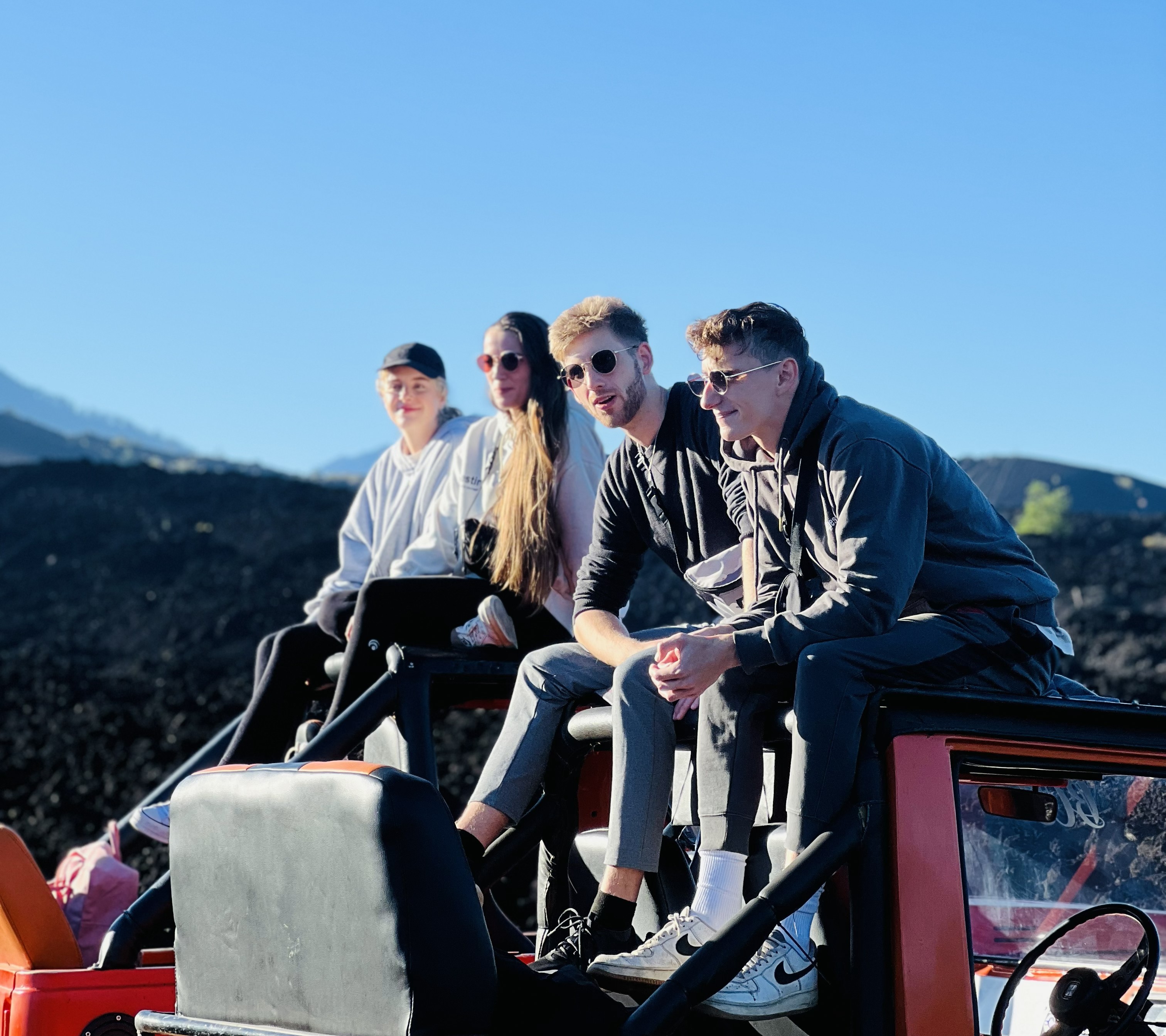
The Black Lava Fields of Kintamani, stretching across the base of the active Mount Batur volcano, offer one of the most surreal, otherworldly landscapes in Bali. Created by historic eruptions in 1926 and 1963, this vast expanse of crystallized black basaltic rock is a haven for off-road enthusiasts, hikers, and photographers alike. However, traversing this sharp, volcanic environment requires distinct technical preparation—the loose terrain and unforgiving geological structures mean that entering unprepared can quickly turn an exciting expedition into a logistical nightmare.
Table of Contents
The Living Landscape: Eruptions and Cultural Taboos
The jagged topography of Kintamani is a direct result of Mount Batur’s violent volcanic history. The massive eruption of 1926 completely engulfed the old village of Batur, leaving behind a highly specialized layer of dense, volcanic rock formations. For local Balinese, the mountain is considered an incredibly sacred spiritual entity, home to the goddess of the lake, Ida Batari Dewi Danu.
When exploring the black lava trails, it is vital to respect local customary rules. Certain rock towers and elevated ridges near local shrines are strictly off-limits for climbing. Visitors are expected to stay on established tracks to prevent micro-erosion of the fragile mineral crust and to avoid disturbing active religious rituals that frequently take place around the base of the caldera.
Terrain & Navigation: Driving on Loose Basaltic Sand
Navigating the Black Lava fields via 4x4 vehicles, dirt bikes, or ATVs presents high-stakes driving conditions. The ground alternates rapidly between razor-sharp, solid basalt flows and pockets of deep, loose volcanic ash that can easily trap tires. To minimize mechanical failure and ensure safe handling, keep these driving principles in mind:
- check_circleLower your tire pressure slightly. Dropping your PSI expands the tire's footprint, providing crucial surface area traction when crossing deep ash dunes.
- check_circleMaintain a steady momentum in low gear. Abrupt acceleration or sudden braking in deep volcanic sand causes wheels to immediately dig themselves into a rut.
- check_circleKeep a safe distance from sharp rock edges. Volcanic basalt rock is incredibly abrasive and can slice through standard street tire sidewalls with ease.
- check_circleNever drift or spin donuts outside designated open clearings. Flying volcanic debris can cause severe injury to nearby hikers or crack expensive vehicle bodywork.
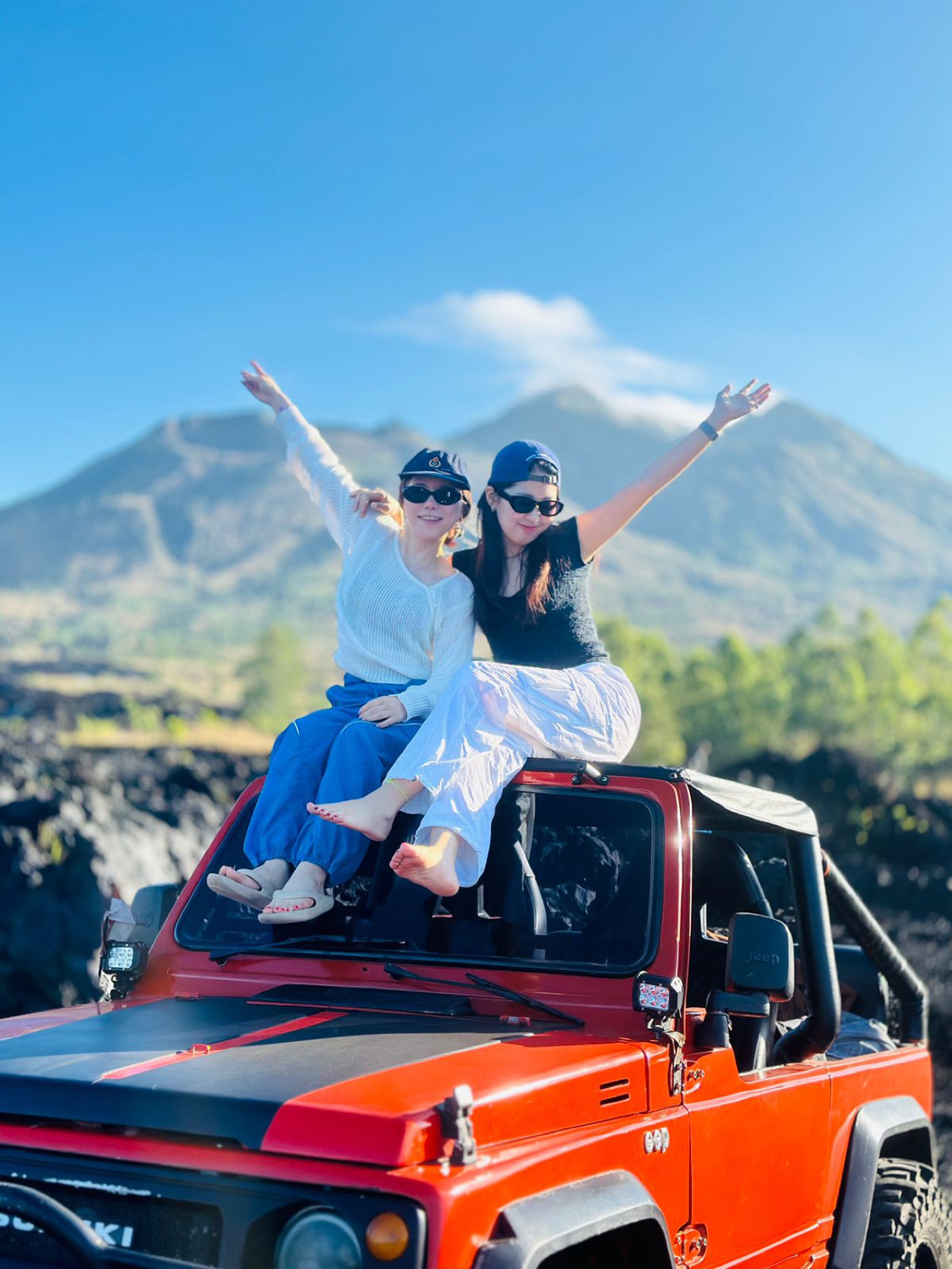
Gear Logistics: Battling Abrasive Volcanic Dust
For photographers and adventurers, the finest particulate matter in Kintamani is your greatest enemy. Volcanic dust consists of microscopic glass and pulverized mineral fragments. On windy days, this dust becomes highly airborne, easily penetrating zipper seams, unsealed camera bodies, and phone charging ports.
Before hitting the trails, carry out a thorough protective gear prep. Always wear a tightly sealed face mask or neck gaiter, alongside impact-resistant goggles to shield your eyes from flying grit. If you are operating mirrorless cameras, completely avoid changing lenses while standing directly in open, wind-exposed fields; wait until you are shielded inside your vehicle to protect your sensor from abrasive debris.
The Photographer's Lens: Capturing High-Contrast Shadows
Visually, the Kintamani Caldera offers an intense, dramatic canvas. Because the ground is pitch black, it acts as a massive natural light sink, creating incredibly stark, high-contrast scenes. The prime window for shooting is during the early morning golden hour, right as the sun breaches the outer caldera rim, casting deep, elongated shadows across the rippled lava ridges.
format_quote“The black lava fields demand respect from your gear and your body. The contrast between the dark ash and the morning mist creates an almost alien planet atmosphere, but a single slip on that sharp stone will remind you exactly how raw nature is out here.”